
Table of Contents
Introduction
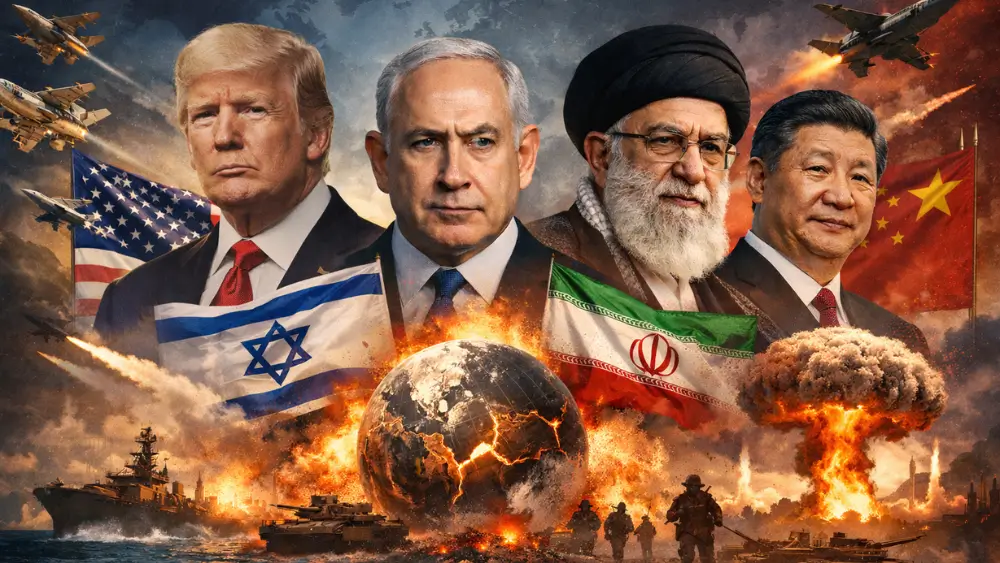
In recent years, global geopolitical tensions have intensified, raising concerns about the possibility of large-scale international conflict. Rising hostilities in the Middle East, strategic military alliances, and shifting global power dynamics have led analysts and commentators to question whether regional disputes could escalate into a global confrontation. One particularly discussed scenario involves potential conflict involving the United States, Israel, and Iran — and whether the involvement of China could transform a regional crisis into a global war.
While such discussions often involve speculation and strategic analysis rather than confirmed events, they highlight real geopolitical tensions shaping the modern world. Understanding the background, potential escalation scenarios, and global consequences helps explain why experts closely monitor these developments.
This article explores the historical context of these tensions, the possibility of global escalation, China’s potential role, and whether fears of a third world war are realistic or exaggerated.
Background of the Conflict
The Strategic Alliance Between the United States and Israel
The United States and Israel maintain one of the strongest strategic partnerships in modern international politics. Since Israel’s establishment in 1948, the United States has supported the country through military aid, intelligence cooperation, and diplomatic backing.
The alliance is based on several factors:
- Shared security interests in the Middle East
- Military and technological cooperation
- Regional stability concerns
- Strategic defense partnerships
The United States views Israel as a key ally in maintaining balance and influence in the Middle East, which explains consistent American support during regional conflicts. For a detailed analysis of Middle East conflicts and US foreign policy, see the Council on Foreign Relations Middle East overview
Historical Tensions Between Israel and Iran
Relations between Israel and Iran have been hostile for decades. After Iran’s Islamic Revolution in 1979, political relations deteriorated rapidly. Since then, both countries have engaged in indirect confrontations through regional proxy conflicts and political rivalry.
Major sources of tension include:
- Iran’s nuclear program and Israel’s security concerns
- Competing regional influence in the Middle East
- Support for opposing groups in regional conflicts
- Cyber operations and intelligence activities
Israel views Iran’s nuclear ambitions as a direct threat to its national security, while Iran opposes Israel’s regional presence and influence.
The Middle East’s Importance in Global Stability
The Middle East holds enormous strategic importance due to its energy resources, trade routes, and geopolitical position. The region controls a large share of global oil reserves, making stability crucial for the world economy.
Any major conflict in the region can lead to:
- Disruptions in global oil supply
- Increased energy prices
- Economic instability worldwide
- International political tension
Because of these factors, conflicts in the Middle East often attract global attention and international involvement.
Current Geopolitical Tensions
Military Developments and Strategic Moves
Military preparedness among global powers has increased in recent years. Nations regularly conduct joint military exercises, strengthen defense systems, and invest in advanced weapons technologies. These actions are often defensive but can also increase tensions by creating mistrust among rival nations.
Key developments include:
- Expansion of military alliances
- Development of missile defense systems
- Increased naval presence in strategic regions
- Investment in cyber warfare capabilities
Such actions can contribute to a security dilemma, where one country’s defensive measures appear threatening to another.
Global Reactions and Diplomatic Pressure
Diplomacy continues to play a major role in preventing escalation. International organizations and governments frequently engage in negotiations, sanctions, and peace talks to manage tensions.
Diplomatic responses typically include:
- Economic sanctions
- Nuclear negotiations
- Mediation efforts
- International pressure for de-escalation
These measures aim to prevent conflicts from expanding into full-scale wars.
Could This Lead to World War 3?
What Defines a Global War
A world war typically involves:
- Multiple major global powers
- Conflict across several regions
- Large-scale military mobilization
- Long-term economic and humanitarian impact
For a regional conflict to evolve into a global war, major nations must directly participate in military confrontation.
Possible Escalation Scenarios
Several hypothetical scenarios could escalate tensions:
Direct Military Confrontation
A direct clash between major powers could rapidly expand conflict boundaries, drawing additional countries into the war.
Expansion of Regional Conflicts
If fighting spreads beyond national borders, neighboring countries may become involved, increasing the scale of conflict.
Nuclear Escalation Risks
The presence of nuclear weapons significantly raises global stakes. Even limited use could trigger widespread international response.
While these scenarios are theoretically possible, they depend on complex political decisions and strategic calculations.
Expert Opinions and Strategic Analysis
Experts remain divided on the likelihood of global war. Some analysts argue that increasing competition between global powers raises risks, while others emphasize strong economic interdependence and diplomatic mechanisms that discourage large-scale conflict.
Key perspectives include:
- Global war is unlikely due to economic consequences
- Nuclear deterrence prevents major conflict
- Regional conflicts remain localized
- Strategic rivalry continues without direct confrontation
Most experts agree that tensions exist but global war remains a low-probability scenario.
Potential Role of China
China’s Strategic Interests
China has expanded its global influence through economic partnerships, trade agreements, and strategic investments. The country maintains strong economic ties with several Middle Eastern nations and relies heavily on energy imports from the region.
China’s strategic priorities include:
- Protecting energy supply routes
- Expanding global economic influence
- Maintaining regional stability
- Strengthening geopolitical position
These interests shape China’s approach to international conflicts.
Possible Military or Political Support
In any major global conflict, China’s involvement could significantly alter the balance of power. Support could take various forms:
- Diplomatic backing
- Economic cooperation
- Military assistance
- Strategic alliances
However, direct military involvement would involve significant risks and costs, making such decisions highly complex.
Impact of China’s Entry on Global Power Balance
If China were to participate in a major conflict involving global powers, the geopolitical landscape would change dramatically. Possible consequences could include:
- Formation of competing global alliances
- Expansion of conflict zones
- Increased economic disruption
- Greater risk of global war
However, China generally emphasizes economic growth and stability, which may discourage direct confrontation.
For more insight into China’s expanding economic influence and its challenge to the existing global financial order, see our detailed analysis on China’s role in dollar dominance, gold reserves, and the emerging world order.
Military Power Comparison
Military capabilities play an important role in strategic calculations. Major global powers possess advanced weapons systems, strong defense infrastructure, and nuclear capabilities.
Key factors in military comparison include:
- Defense budgets
- Technological capabilities
- Nuclear arsenals
- Cyber warfare capacity
- Global military presence
The existence of powerful militaries and nuclear deterrence often prevents direct confrontation because of mutually destructive consequences.
Global Consequences of a Large-Scale War
Economic Impact
A global conflict would significantly disrupt international markets and trade networks.
Potential economic effects include:
- Rising oil and energy prices
- Global recession risks
- Supply chain disruptions
- Trade restrictions
Modern economies are deeply interconnected, meaning conflict in one region can affect the entire world.
Humanitarian and Environmental Effects
Large-scale war would also have severe humanitarian consequences:
- Civilian casualties
- Refugee crises
- Infrastructure destruction
- Environmental damage
Modern warfare technologies increase the scale of potential destruction compared to earlier conflicts.
Impact on Global Security
A global conflict could reshape international politics and security systems for decades. Possible outcomes include:
- Political instability in multiple regions
- New global alliances
- Changes in international power structures
- Long-term security challenges
These risks explain why global diplomacy focuses heavily on preventing escalation.
Is World War 3 Likely or Just Speculation?
Despite growing geopolitical tensions, many experts argue that a third world war remains unlikely. Several factors reduce the probability of large-scale global conflict:
Nuclear Deterrence
The destructive power of nuclear weapons discourages direct military confrontation between major powers.
Economic Interdependence
Global economies depend on trade and cooperation, making war economically devastating for all sides.
Diplomatic Mechanisms
International institutions and diplomatic channels provide tools to resolve disputes peacefully.
Strategic Stability
Most global powers prioritize long-term stability over unpredictable military escalation.
While tensions persist, global systems currently favor competition without direct war.
The Role of Media and Public Perception
Media coverage and online discussions often amplify fears of global conflict. Speculative scenarios and dramatic headlines can create the impression that war is imminent, even when diplomatic efforts continue behind the scenes.
Understanding the difference between analysis, speculation, and confirmed developments is essential for interpreting global events accurately.
Future Outlook
The future of global stability depends on several factors:
- Continued diplomatic engagement
- Responsible military policies
- Economic cooperation
- Conflict resolution mechanisms
While tensions among major powers will likely continue, international cooperation remains a strong counterbalance to global war.
Conclusion
Rising tensions involving the United States, Israel, Iran, and the potential involvement of China reflect complex geopolitical realities shaping the modern world. Historical rivalries, regional conflicts, and global power competition contribute to uncertainty about the future.
However, while discussions about a possible global war capture public attention, most experts view such scenarios as speculative rather than imminent. Nuclear deterrence, economic interdependence, and diplomatic engagement continue to reduce the likelihood of a worldwide conflict.
Understanding these geopolitical dynamics helps provide clarity in an increasingly complex international landscape. Rather than predicting inevitable war, current global trends highlight the ongoing struggle between conflict and cooperation — a balance that will ultimately determine the future of global stability.