
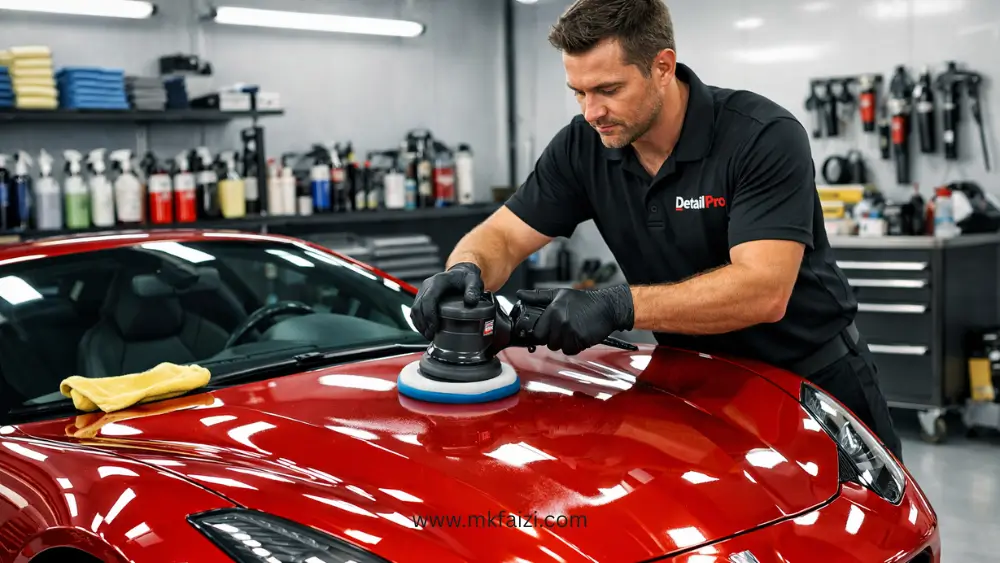
A solo mobile detailer, working three jobs a day at an average ticket of $150, can clear over $100,000 a year — and keep most of it. No shop lease. No staff. No million-dollar buildout. Just a van, a professional setup, and a system that gets customers coming back.
The U.S. car detailing market is now worth $18.6 billion and is projected to keep growing through 2030. The mobile segment alone is expanding at 19.35% annually — nearly four times faster than the overall industry. More car owners want professional care, and they increasingly want it brought to their driveway, not the other way around.
If you have an eye for detail and a willingness to treat this like a real business — not a side hustle — 2026 may be the best time to launch.
This guide covers every step: choosing your business model, researching your market, handling the legal and insurance side, building your service menu, pricing correctly, and landing your first clients within the first week. By the end, you’ll have a clear 30-day launch plan you can act on immediately.
Table of Contents
What Is Car Detailing? (And Why It’s Not Just a Car Wash)
Most people think car detailing is a fancy car wash. It isn’t. A car wash is automated, takes eight minutes, and costs $12. Car detailing is a hands-on, multi-hour process that cleans, restores, and protects a vehicle’s surfaces — inside and out — at a level no machine can replicate.
That distinction matters because it’s what justifies your pricing, explains your value to clients, and tells you which services will command the highest margins.
Exterior detailing: what’s included
Exterior detailing goes far beyond washing the outside of a car. A professional exterior detail typically includes:
- Hand wash and dry using pH-neutral soap and microfiber mitts to avoid scratching the clear coat
- Clay bar treatment to remove bonded contaminants like road tar, industrial fallout, and rail dust
- Paint correction using a dual-action or rotary polisher to remove swirl marks, scratches, and oxidation
- Polish and glaze to restore paint clarity and depth
- Sealant, wax, or ceramic coating to protect the paint surface from UV, water, and environmental damage
- Wheel and tire care — cleaning, dressing, and protecting rims and rubber
- Headlight restoration to remove UV yellowing from plastic lenses
- Engine bay cleaning on request
Interior detailing: what’s included
Interior detailing is the work most clients value most, because it’s what they experience every day. A full interior detail includes:
- Deep vacuuming of seats, carpets, floor mats, and crevices
- Carpet and upholstery shampooing using an extractor
- Leather cleaning and conditioning to prevent cracking and fading
- Dashboard, door panels, and trim cleaning with appropriate protectant
- Air vent cleaning using detailing brushes
- Window and mirror cleaning from the inside
- Odor elimination — often with ozone treatment for severe cases
Premium and specialty services (your upsells)
Beyond a standard detail, premium services carry significantly higher price tags and margins:
- Ceramic coating ($500–$2,000+) — a semi-permanent liquid polymer that bonds to the paint and provides years of protection
- Paint protection film (PPF) — physical film applied to high-impact areas
- Paint correction — multiple stages of machine polishing to remove deeper defects
- EV-specific detailing — electric vehicles have unique surfaces (no exhaust residue, but high-voltage battery compartments, sensitive touchscreens, and specialty paint)
| Car Wash | Car Detailing | |
|---|---|---|
| Time | 5–15 minutes | 2–8+ hours |
| Method | Automated / quick hand | Manual, multi-step process |
| What’s cleaned | Exterior surface only | Exterior + full interior |
| Result | Removes loose dirt | Restores, protects, transforms |
| Price range | $10–$30 | $80–$2,000+ |
Understanding this distinction helps you sell. When a client asks why you charge $200 for a full detail, you can walk them through exactly what that time covers — and why a $20 car wash simply can’t achieve the same result.
Choose Your Business Model: Mobile vs Shop vs Hybrid
Before you spend a dollar, you need to decide how you’ll operate. This single decision shapes your startup costs, your daily workload, your profit margins, and how quickly you can grow.
There are three models. Each has different economics.
Mobile detailing: pros, cons & startup costs
Mobile detailing means you bring your equipment to the client — at their home, office, or wherever their vehicle is parked.
Startup costs: $5,000–$15,000 for a professional setup (van, equipment, supplies, insurance, registration). You can get started for as little as $500 if you already own a reliable vehicle and buy starter-grade gear.
Monthly overhead: Approximately $500–$1,000 (insurance, fuel, supplies, software) — compared to $3,000–$5,000+ for a shop.
Profit margins: Solo mobile detailers routinely achieve 60–80% gross profit margins. When you eliminate rent and employee costs, the math is extremely favorable.
Why mobile wins in 2026: Most car owners would rather have you come to them than take time out of their day to drive to a shop, wait, and drive back. Convenience is a premium clients will pay for. Mobile also lets you validate demand before committing to a lease, scale by adding a second van rather than signing a bigger lease, and test different neighborhoods without being locked to one location.
The main challenge: You’re dependent on weather, need to manage a mobile water supply, and your physical reach is limited by your drive radius. You also need commercial auto insurance on top of general liability.
Fixed-location shop: pros, cons & startup costs
A physical shop gives you a climate-controlled environment for year-round consistency, space for paint booths and ceramic coating stations, and potential walk-in traffic from a visible storefront.
Startup costs: $94,000–$300,000+. Construction and buildout typically runs $150–$250 per square foot. Factor in equipment, signage, initial inventory, and 3–6 months of operating reserve.
Monthly fixed costs: $3,000–$5,000 before you service a single vehicle — rent, utilities, insurance, and facility maintenance.
The honest assessment: A fixed location makes far more sense after you’ve validated local demand and built capital through successful mobile operations. Going shop-first exposes you to significant financial risk before you know whether your market, pricing, and service mix actually work.
Home-based detailing: what the law says
Working from home is appealing, but it comes with real legal constraints most new detailers don’t check before they start.
- Zoning laws: Many residential areas prohibit commercial vehicle traffic, restrict signage, or ban business operations that generate noise or wastewater. Check your city’s planning department website before assuming you can operate from home.
- Wastewater rules: The EPA has regulations around water runoff from vehicle washing. Even if you’re in your driveway, you may need a wastewater discharge permit. Contact your local environmental protection office.
- Insurance: Your homeowner’s policy will not cover damage to a client’s vehicle on your property. You still need business insurance.
Which model is right for you?
| Mobile | Shop | Home-Based | |
|---|---|---|---|
| Startup cost | $5K–$15K | $94K–$300K+ | $500–$3K |
| Monthly overhead | $500–$1,000 | $3,000–$5,000+ | $300–$600 |
| Gross margin | 60–80% | 35–55% | 65–80% |
| Risk level | Low | High | Low–Medium |
| Scale ceiling | High (add vans) | High (add bays) | Limited |
| Best for | Most new detailers | Established operators | Testing phase only |
Recommendation: Start mobile. Prove your market, build your reviews and client base, and invest in a shop once you have established revenue that justifies the overhead.
Research Your Market & Find Your Niche
The biggest mistake new detailers make is launching before understanding who their market actually is. “People with cars” is not a target market. You need to know who in your area needs what service at what price — and where the gaps are.
How to size your local market
You don’t need expensive software. Start with free tools:
- Google Maps audit: Search “car detailing,” “mobile detailing,” and “auto detailing” within your target radius. Note how many operators exist, their review count, their average rating, and what services they list. A market with 10 competitors at 3.5-star ratings is wide open. A market with 3 competitors averaging 4.9 stars and 500+ reviews requires a sharper niche.
- Competitor pricing research: Check their websites, Google profiles, and Yelp listings. Screenshot their packages and prices. This becomes your pricing baseline.
- Census data: Go to census.gov and check household incomes and vehicle ownership rates by zip code. Higher-income zip codes with high vehicle ownership rates are where your premium services sell. Suburbs with long commutes often have busy professionals who value mobile convenience.
- Review mining: Read the negative reviews of your competitors. One-star reviews about long wait times, poor interior work, or no mobile option are literally telling you what niche to own.
High-value customer segments to target
Not all clients are equal. Some are worth 10x more than others over time.
- Luxury and performance car owners: These clients own Porsches, BMWs, Teslas, and Corvettes. They have the highest willingness to pay, care deeply about paint condition, and will pay premium prices for ceramic coatings, paint correction, and specialists who understand their cars. One client like this can be worth $1,500–$3,000+ per year.
- Busy professionals at corporate offices: If you can secure permission to work in a corporate parking lot, you can knock out 3–5 vehicles in a single location while their owners are in meetings. This is efficient, high-volume work. Many will sign up for monthly maintenance plans.
- Car dealerships: Dealerships need vehicles detailed constantly — new inventory coming in, used vehicles being prepped for sale, and demo vehicles maintained. A single dealership contract can represent $3,000–$8,000/month in steady, predictable revenue. This is the B2B play most new detailers completely ignore.
- EV owners: Tesla, Rivian, and Lucid owners represent a fast-growing segment with a specific pain point: most detailers don’t understand their vehicles. Paint protection film placement, touchscreen care, battery compartment protocols, and wheel arch sensitivity differ from traditional vehicles. A specialist who understands EVs can command 25–40% premium pricing.
Finding your unique positioning
Generic is the enemy of profitable. “High quality car detailing” is what every detailer claims. It is not a positioning strategy — it’s not even a sentence that means anything to a potential customer.
A genuine niche looks like:
- “Mobile ceramic coating specialist for Tesla and EV owners in [City]”
- “Fleet detailing for local businesses and commercial vehicles”
- “Eco-friendly, waterless mobile detailing for apartment residents”
- “Dealership prep specialist — fast turnaround, volume pricing”
A strong niche lets you charge more, market more precisely, and build a reputation faster than a generalist who chases every job.
Three questions to find your niche:
- What do your competitors refuse to do or do badly?
- Which customer segment has money and a specific problem nobody is solving?
- What services can you offer that justify a 30%+ price premium?
Write a Lean Business Plan
A business plan doesn’t need to be a 40-page document. For a service business like car detailing, a lean plan covering six key areas is enough to guide your decisions, set realistic expectations, and, if needed, present to a lender.
What your business plan needs to cover
1. Business overview: What you do, who you serve, what model you’ll use (mobile/shop/home), and your target service area.
2. Target market: Who specifically you’re going after. Refer back to your market research. Define your ideal client by income level, vehicle type, and pain point.
3. Services and pricing: List your packages and add-ons with prices. (Section 7 covers this in detail.)
4. Marketing strategy: How you’ll get clients in month 1 and build a long-term pipeline. (Covered in Section 8.)
5. Startup costs: Every dollar you’ll spend before your first booking.
6. Financial projections: Revenue forecasts for months 1–12, broken into conservative, moderate, and aggressive scenarios.
Revenue projection calculator: 3 scenarios
Build your projections around jobs per day, average ticket price, and working days per year.
| Scenario | Jobs/Day | Avg Ticket | Working Days | Annual Revenue |
|---|---|---|---|---|
| Conservative | 2 | $120 | 220 | $52,800 |
| Moderate | 3 | $150 | 240 | $108,000 |
| Aggressive | 4 | $200 | 250 + premium services | $200,000+ |
The moderate scenario — three jobs per day at a $150 average — is achievable within 6–12 months for most focused operators. The aggressive scenario requires premium services like ceramic coating and paint correction in the mix.
Startup cost breakdown by model
Mobile setup:
- Bare minimum (testing the market): $500–$1,500
- Professional launch: $5,000–$15,000
- Multi-van operation: $25,000–$50,000
Fixed-location shop:
- Buildout and equipment: $94,000–$300,000+
- Monthly operating reserve (3–6 months): $10,000–$30,000
Recurring monthly costs (mobile):
- Business insurance: $75–$150/month
- Supplies and chemicals: $150–$300/month
- Fuel: $200–$400/month
- Booking software: $30–$80/month
- Marketing: $0–$200/month (mostly free at the start)
Total monthly overhead for solo mobile operator: approximately $500–$1,000
At an average ticket of $150 and 60% gross margin, you need just 6–8 jobs per month to cover overhead. Everything above that is profit.
Free Resource: Download our car detailing business plan template — pre-filled with the financial models above, editable for your market and services. Click here to download
Register Your Business, Get Licensed & Stay Legal
Most new detailers skip this section until something goes wrong. Don’t. Getting your legal foundation right in the first week takes a few hours and costs a few hundred dollars. Getting it wrong can cost you your business, your personal savings, and your reputation.
Choose your business structure
Sole proprietorship: The default structure if you do nothing. Easy to set up (no paperwork required in most states), but it offers zero liability protection. If a client’s car is damaged and they sue, your personal bank account and assets are on the table. Acceptable only for very early testing — not for a real business.
LLC (Limited Liability Company): The right choice for most detailers. An LLC separates your personal and business assets, so if something goes wrong with a client’s vehicle, your personal savings, home, and other assets are protected. It also offers pass-through taxation — profits are taxed on your personal return, avoiding double taxation. Filing costs $50–$500 depending on your state. Takes 1–2 weeks.
S-Corporation: Worth considering once your annual net profit exceeds approximately $80,000. At that level, an S-Corp structure can reduce your self-employment tax burden by allowing you to split income between salary and distributions. Talk to a CPA before making this switch.
Recommendation: Form an LLC from day one.
Licenses and permits you need
Requirements vary by state and city, but the following apply to most car detailing businesses:
- General business license: Issued by your city or county clerk’s office. Typically $25–$100/year. Required before you start taking money.
- Sales tax permit: Required in most states if you charge sales tax on services. Check your state’s department of revenue website.
- EPA wastewater/water discharge permit: This one trips up many new detailers. When you wash a car, the water runoff contains soap, road chemicals, tire residue, and metal particles. The EPA regulates where this goes. Contact your local environmental protection office before you start. Some areas require a water reclamation system. Fines for non-compliance can be severe.
- Zoning approval: If you plan to operate from a fixed location or your home, verify that your zone allows it. Check your city’s planning department website.
- Home occupation permit: Required in many cities if you run any business from a residential address.
Step-by-step legal setup checklist:
- File LLC paperwork with your state ($50–$500 at your secretary of state’s website)
- Apply for EIN at IRS.gov — free, takes 5 minutes, you’ll get it instantly
- Open a dedicated business checking account (bring your LLC documents and EIN)
- Apply for a general business license at your city/county clerk’s office
- Research and apply for any required environmental permits
- Purchase business insurance (see below)
Insurance: what you actually need
This is the part most new detailers underinvest in — until a $45,000 BMW gets a swirl mark that a client blames on you.
General liability insurance: Covers bodily injury and property damage claims against your business. A $1 million per occurrence / $2 million aggregate policy is standard. Annual premiums typically run $400–$900 for a solo mobile operator. This is your baseline — do not operate without it.
Garage Keeper’s Liability insurance: Covers damage to a customer’s vehicle while it is in your care, custody, or control — even if you didn’t cause the damage. This is non-negotiable for anyone touching client vehicles. General liability alone does NOT cover this. A standard GL policy will not pay if a client’s car is damaged during a detail. Garage Keeper’s fills that gap.
Commercial auto insurance: If you use any vehicle for business purposes — driving to client locations, transporting equipment — your personal auto insurance policy will not cover you in an accident. Commercial auto is required. Annual cost: $900–$2,500 depending on vehicle, coverage level, and driving history.
Workers’ compensation: Required in most states as soon as you hire your first employee. Even a part-time helper triggers this requirement in many states. Check your state’s requirements before bringing anyone on payroll.
Total annual insurance cost for a solo mobile operator: approximately $1,500–$3,000.
Equipment & Supplies: What to Buy (By Budget)
Your equipment directly determines the quality of your work, the speed of each job, and ultimately your hourly earnings. Buying too cheap leads to poor results and equipment failure. Buying too expensive before you have consistent revenue is an unnecessary risk.
Here’s how to think about it: buy the minimum gear that lets you do professional-quality work, validate your market, and upgrade as revenue grows.
The essential equipment list
Machines:
- Dual-action (DA) polisher — the workhorse of paint correction and wax application
- Wet/dry vacuum (at least 6-gallon, 5+ HP)
- Foam cannon (attaches to pressure washer)
- Pressure washer (1,500–2,000 PSI for mobile; avoid going too high on car paint)
- Hot/cold water extractor for carpet and upholstery (rent before you buy)
Mobile-specific gear:
- Water tank (50–100 gallons) — necessary if clients don’t have hose access
- 12V water pump + hose reel
- Generator (or a van with a power inverter) for running equipment off-grid
Consumables and supplies:
- pH-neutral car shampoo
- All-purpose cleaner (APC) / degreaser
- Clay bar or clay mitt
- Iron remover / fallout remover
- Spray sealant or paste wax
- Tire shine and dressing applicators
- Interior protectant (for plastic trim and vinyl)
- 20–30 microfiber towels minimum — use separate dedicated towels for paint surfaces, glass, interior, and wheels. Never cross-contaminate.
Detailing accessories:
- Detailing brushes (multiple sizes, for vents, crevices, wheels)
- Foam applicator pads
- Plastic trim restoration pen or gel
- Glass polish for water spots
- Odor eliminator spray
Budget breakdown: starter / professional / premium
| Starter | Professional | Premium | |
|---|---|---|---|
| Investment | $500–$1,500 | $3,000–$8,000 | $15,000–$25,000 |
| Polisher | Costco/Amazon DA (~$80) | Griots Garage G9 (~$250) | Rupes LHR 15 Mark III (~$500) |
| Vacuum | Shop-Vac 5-gallon (~$60) | Ridgid 9-gal (~$120) | Mytee Lite Extractor (~$700) |
| Pressure washer | Sun Joe 1,750 PSI (~$120) | Simpson MegaShot (~$350) | Kranzle 1400 (~$900) |
| Chemicals | Chemical Guys starter kit (~$70) | Full Chemical Guys / Meguiar’s inventory (~$400) | Gtechniq / Gyeon professional range (~$1,200) |
| Towels | Amazon 24-pack (~$25) | The Rag Company 50-pack (~$120) | The Rag Company bulk wholesale (~$300) |
| Best for | First 2–3 months of testing | Full-time professional launch | Established detailer adding premium services |
Where to buy: best suppliers for detailers
- Chemical Guys / Meguiar’s: Starter chemical kits at $50–$70, widely available, prevents compatibility issues if you stick to one brand’s line
- Detail King: Professional-grade equipment and supplies, packages designed for new detailers, no high minimum order quantities
- Autogeek: Large selection of professional products, good for building out your chemical inventory
- The Rag Company: Best source for microfiber in volume — buy wholesale once you’re going through towels regularly
- Facebook Marketplace / Craigslist: Used polishers, extractors, and vacuums at 40–60% of retail. A used Rupes polisher in good condition beats a new budget polisher every time.
What NOT to buy when starting out
- A rotary polisher: Rotary machines remove paint aggressively and require significant skill. A beginner with a rotary can burn through clear coat in seconds. Master your DA polisher first.
- A van wrap: Wraps cost $1,500–$3,500. Don’t spend money on branding until you have 30+ reviews and stable monthly revenue. Your results are your advertisement at the start.
- Ceramic coating equipment: Ceramic coating is a premium service that requires proper certification, a controlled environment, and significant practice. Don’t offer it until you’ve trained for it.
- Brand new professional-grade everything: Your first $1,500 in equipment will teach you what you actually need. Let the market validate your business before you invest like you’re certain.
Build Your Service Menu & Set Your Prices
Pricing is where most new detailers destroy their profitability before they even get started. They charge too little to “get experience” or “beat the competition” — and end up making $12/hour while working harder than they ever did at a regular job.
Your prices need to cover your costs, pay you fairly, and reflect the value of a professional result. Here’s how to build a menu that does all three.
The 3-tier service package structure
Start with three core packages. Simple menus close faster than long menus. Clients should be able to pick a tier in under 60 seconds.
Package 1 — Basic Exterior ($80–$120)
- Hand wash and dry
- Wheel and tire clean + dressing
- Window clean (exterior)
- Tire shine
- Quick interior vacuum
- Time: 1–1.5 hours | Your chemical cost: $8–$12 | Margin: 85–90%
Package 2 — Full Interior Detail ($150–$200)
- Deep vacuum of all surfaces
- Carpet and upholstery shampoo
- Leather clean and condition (if applicable)
- Dashboard, door panels, and trim clean + protect
- Interior windows
- Odor treatment
- Time: 3–4 hours | Your chemical cost: $10–$14 | Margin: 85–90%
Package 3 — Full Detail — Interior + Exterior ($250–$450)
- Everything in Package 1 + Package 2
- Clay bar treatment
- Single-stage machine polish
- Spray sealant or hand wax application
- Time: 5–8 hours | Your chemical cost: $25–$40 | Margin: 80–88%
High-margin add-on services
Add-ons are where your hourly rate jumps significantly. Introduce them at the end of every booking call or quote.
| Add-on Service | Price Range | Time | Chemical Cost | Margin |
|---|---|---|---|---|
| Ceramic coating | $500–$2,000+ | 4–8 hrs | $80–$200 | 75–90% |
| Paint correction (single stage) | $200–$400 | 3–5 hrs | $30–$60 | 82–88% |
| Paint correction (multi-stage) | $500–$800 | 6–10 hrs | $60–$120 | 80–88% |
| Headlight restoration | $50–$100 | 20–40 min | $5–$10 | 88–95% |
| Engine bay detail | $100–$200 | 45–90 min | $10–$20 | 85–92% |
| Odor elimination (ozone) | $75–$150 | 60–90 min setup | $5–$10 | 90–95% |
| Fabric protection coating | $80–$150 | 45–60 min | $15–$30 | 80–88% |
Headlight restoration deserves special mention: it takes under 30 minutes, costs less than $10 in product, and you can charge $75–$100. At $200+/hour in effective rate, it’s the highest-margin service on this list.
How to price correctly (the formula)
Don’t price based on what you feel like charging. Price based on your actual economics.
Step 1: Calculate your minimum hourly rate
(Monthly overhead ÷ monthly working hours) + desired hourly profit = your floor rate
For a mobile detailer with $800/month overhead working 120 hours/month who wants to earn $50/hr:
$800 ÷ 120 = $6.67 overhead/hr + $50 = $56.67/hr minimum
Step 2: Apply vehicle size multipliers
- Sedan / coupe: base price
- SUV / crossover: +20%
- Full-size truck or van: +30–35%
- Oversized / motorhome: quote individually
Step 3: Add travel cost for locations beyond your base radius
- Standard radius (15 miles): included in price
- Beyond 15 miles: add $10–$20 flat travel fee or build it into the quote
Step 4: Check against your local market Use your competitor research from Section 3. Price at or slightly above local market for basic services. Price premium services independently — there are often no direct comparisons, and clients will pay for quality.
The one rule: Never discount to win first clients. Clients who hire you because you’re cheapest are the hardest to retain and the slowest to leave reviews. Price fairly and compete on quality.
Recurring maintenance plans: your subscription revenue
The most profitable detailers don’t live job to job — they build a recurring revenue base through maintenance plans.
Monthly maintenance plan: Exterior wash, quick interior vacuum, window clean, tire dressing — $80–$120/month. Sells well to busy professionals and luxury car owners who want their car looking good week to week without a big time commitment.
Quarterly full detail plan: Full interior + exterior detail every three months — $200–$350/quarter. Pairs well with a monthly surface-clean plan as an upgrade.
Why subscriptions change your business:
- Predictable cash flow — you know what you’re earning before the month starts
- Lower customer acquisition cost — you retain instead of constantly recruiting
- Higher customer lifetime value — a $100/month client over 2 years is worth $2,400
- Better scheduling — maintenance plan clients fill predictable weekly slots
Pitch the maintenance plan at the end of every full detail appointment: “Most of my regular clients do a monthly refresh between full details — it’s [price]/month and keeps everything in the condition it’s in right now. Want me to add you to the schedule?”
Get Your First Clients & Build a Marketing System
The business plan is done, the LLC is filed, the equipment is ready. Now you need paying clients. Here’s exactly how to get your first five bookings in week one — and build a system that keeps the calendar full after that.
Your first 5 clients: week 1 playbook
Day 1–2: Friends, family, and neighbors Offer 2–3 free or heavily discounted details to people in your network. The purpose is not the money — it’s the before/after photos, the experience, and ideally, a Google review. Choose people with visibly dirty vehicles in the target price range (someone with a 5-year-old BMW is a better practice client than someone with a beater Corolla).
Document everything with photos. Before shots of every panel and the interior. After shots in good light with a consistent background. This content will do your marketing for the next several months.
Day 3–4: Local Facebook Groups Post a launch offer in your local community Facebook Group, neighborhood group, and any nearby “buy/sell/trade” groups:
“Hey [City]! Just launched my mobile detailing business and taking our first clients this week. Booking 50% off full interior + exterior details through Friday — I come to you. DM me for pricing and availability.”
Include two of your best before/after photos. Do not make the post look like an ad. Write it conversationally.
Day 5: Car enthusiast groups Search Facebook for local car clubs, car meet groups, and marque-specific groups (Mustang owners, BMW enthusiasts, JDM clubs). These members care deeply about their vehicles and will pay for quality work. Join the groups and engage genuinely before pitching. When appropriate, introduce your services.
Day 6–7: Local businesses with fleet vehicles Make a list of businesses near you with company vehicles — landscapers, plumbers, real estate agencies, delivery services. Drive by or call and introduce yourself. Offer a discounted fleet rate for a trial detail on one vehicle. A single B2B account can become $500–$2,000/month in steady, scheduled work.
Goal: 3–5 bookings in week one. That’s enough to cover your first month’s overhead and generate your first reviews.
Set up your Google Business Profile (highest long-term ROI)
Your Google Business Profile is your most powerful free marketing tool. When someone in your area searches “car detailing near me” or “mobile detailing [city],” your profile is what appears. Here’s how to set it up correctly:
- Go to business.google.com and claim or create your profile
- Complete every field: business name, category, service area, phone, website, hours
- Choose the correct primary category: “Car detailing service” — not just “auto shop”
- Add a secondary category: “Auto detailing shop”
- Upload at least 10 photos at launch: your setup, before/after results, you working
- Add your service menu with descriptions and prices
Getting reviews is the single highest-leverage activity in your first 6 months. After every job, text the client directly:
“Thanks so much for today — really enjoyed working on the [car model]. If you have 30 seconds, a Google review would mean the world: [direct link]. Most clients say it takes less than a minute.”
The fastest-growing mobile detailing businesses reach 50+ Google reviews within 6 months. That’s 2–3 reviews per week — achievable if you ask every single client, every single time.
Build your online presence
Website: You don’t need anything complicated. A single-page site with your services, pricing, before/after gallery, and a booking form is enough. Tools like Squarespace or Wix let you build this for $15–$25/month. Make sure your page title includes your city name and “car detailing” — this is basic local SEO that most new detailers ignore.
Instagram and TikTok: Before/after detailing content is among the highest-performing content in the automotive niche on both platforms. A 15-second timelapse of a filthy interior being transformed gets organic reach that paid ads can’t buy. Post consistently — even 3 times per week compounds over time. Use location tags and relevant hashtags.
Directories: List on Thumbtack, Angi (formerly Angie’s List), and Yelp on day one. These platforms generate passive leads from customers actively searching for services. Fill out every field and add photos. Respond to every inquiry within 1 hour.
Referral and loyalty system
The cheapest new client is one you didn’t have to market to at all.
Referral program: Offer $15–$20 account credit for every new client a current client refers who books an appointment. Tell clients about this explicitly at the end of every appointment. Most won’t act — but the 20% who do will become your most valuable source of leads.
Loyalty card: A physical or digital punch card — 5th detail free, or 10% off the 6th visit. This is especially effective for clients on non-subscription recurring visits.
Maintenance plan upsell: Every full detail client should hear about your monthly maintenance plan. Most will say no. Some will say yes. The ones who say yes become your most profitable, most loyal, most review-generating clients.
Run Your Business: Tools, Operations & Day-to-Day Systems
Great detailing work can be undone by poor business operations. Clients who have to chase you for a confirmation, can’t pay by card, or never hear from you again after their appointment will leave you for a competitor who makes the experience feel professional end to end.
These are the systems that make your business run smoothly.
Booking and scheduling software
Manual scheduling via text message works for 5 clients. It breaks down at 30. Invest in booking software early.
Look for a tool that handles:
- Online booking with real-time availability
- Automated appointment confirmation and reminder texts
- Upfront deposit collection (dramatically reduces no-shows)
- Job scheduling and route optimization
Recommended tools:
- Housecall Pro ($49–$129/month) — purpose-built for mobile service businesses, excellent route management
- Jobber ($29–$99/month) — strong for invoicing, quoting, and client management
- Square Appointments (free–$29/month) — good entry-level option for solo operators
Require deposits on large jobs. A 25–50% deposit on paint correction or ceramic coating appointments protects you against last-minute cancellations after you’ve blocked off a full day. Standard practice — clients expect it for premium services.
Invoicing and payments
Accept every payment method your clients might use. Cash-only businesses lose clients who don’t carry cash or who prefer card for tracking expenses.
Accept: Debit/credit cards (Stripe, Square), Venmo, Zelle, PayPal, Apple Pay, cash.
Invoicing tools:
- Wave — free invoicing and basic bookkeeping, excellent for new solo operators
- QuickBooks Simple Start ($15/month) — more robust, integrates with your bank, simplifies tax time
- Invoice Fly — designed for field service pros, fast mobile invoicing
Track every expense from day one. Your tax deductions as a detailer are significant: equipment, vehicle mileage ($0.67/mile in 2024), supplies, insurance, software subscriptions, training, and more. A shoebox of receipts at tax time is avoidable. Use Wave or QuickBooks from the first week.
Quality control and customer experience
Consistency is the difference between a hobby and a business. If your results vary depending on how tired you are or how distracted you got, your reputation will reflect that.
Job checklist: Create a written checklist for every service package. Work through it in the same order every time. Consistency protects you against missing something obvious and ensures every client gets the same experience.
Before and after photos: Photograph every vehicle before you touch it and after you finish. This protects you legally (documented pre-existing damage), creates your marketing content library, and gives clients visual proof of your work. Send the after photos to the client — it’s a mini “reveal” that delights people and makes them more likely to review you and refer you.
48-hour follow-up text: Two days after every appointment, send a short message:
“Hey [Name], just checking in — hope you’ve been enjoying the clean! Let me know if there’s anything you’d like touched up, and I’d love to add you to my regular rotation. [Your name]”
This creates a second touchpoint that reinforces quality, invites referrals, and often converts one-time clients into recurring ones.
Scale Your Detailing Business: From Solo to $100K+
Once you’ve validated your market, built your review base, and established consistent monthly revenue, the question shifts from “how do I get started” to “how do I grow.”
Scaling a detailing business happens in predictable stages. Understanding each stage — and what unlocks the next one — prevents you from trying to hire employees before you’re ready or invest in a shop before the revenue justifies it.
Income milestones and what unlocks each one
$30,000–$50,000/year: Solo mobile, basic services At this stage, you’re building your client base, getting reviews, and refining your process. The lever at this stage is pricing and efficiency — not volume. Raise your prices until you start losing roughly 10–15% of inquiries to price objections. That’s the healthy sign you’re in the right range. Optimize your job sequence so you’re spending more time detailing and less time driving and setting up.
$50,000–$80,000/year: Add premium services Once you have 30+ Google reviews and consistent weekly bookings, start adding paint correction and ceramic coating to your menu. These services take more time per job but dramatically increase your per-hour rate. A single ceramic coating job at $1,200 equals 8–10 standard details. Get certified through a professional detailing organization (the International Detailing Association offers recognized certification programs). Certification increases client trust and lets you charge premium prices.
$80,000–$120,000/year: Recurring plans + B2B contracts At this income level, you’re running at near-capacity as a solo operator. The growth levers now are:
- Converting one-time clients to monthly maintenance plans (recurring revenue)
- Landing one or two dealership or fleet contracts (steady, scheduled volume)
- Building a waitlist — scarcity is a pricing tool
$120,000–$200,000+/year: Add a second operator or van Hire your first employee or subcontractor only when you’re consistently turning away 20%+ of inquiries. Bring them on part-time first, train them thoroughly on your system and standards before they work with clients independently. Adding a second van doubles your capacity — and, if you’ve built the marketing system, doubles your revenue.
When and how to hire your first employee
The most common hiring mistake in service businesses: hiring too early. Hiring when you have occasional overflow capacity adds overhead to your operation when you don’t yet have the revenue to support it.
Hire your first employee when:
- You’re turning away at least 5–10 inquiries per week
- You have a documented process and job checklist they can be trained on
- You can cover their wages for 3 months even if revenue dips
When you do hire:
- Start with a part-time arrangement while they shadow you
- Don’t send them to client vehicles until you’ve watched them work on personal or practice vehicles
- Set up payroll correctly from day one (Gusto or QuickBooks Payroll, $30–$50/month)
- Check your state’s workers’ compensation requirements — they apply from the first hire
2026 trends shaping the detailing industry
Electric vehicle detailing: EV ownership is growing rapidly. Tesla alone sold over 1.8 million vehicles globally in 2023. Many EV owners find that most detailers are unfamiliar with their vehicles — paint differences, wheel arch geometry, battery compartment considerations, and touchscreen care. A detailer who specializes in EVs can charge 25–40% more than a generalist and access a fast-growing, high-income client segment with very few specialized competitors.
Waterless and eco-friendly detailing: Environmental regulations on water use and runoff are tightening in many parts of the country. Waterless detailing products and techniques are growing in demand, particularly in apartment buildings, urban environments, and water-restricted areas. Positioning as an eco-friendly operator opens access to locations (condo parking garages, commercial buildings) where traditional water-based detailing isn’t permitted.
Ceramic coating mainstream adoption: Ceramic coating is no longer a niche service for exotic car owners. It’s increasingly being requested by everyday drivers who want long-term paint protection. This means larger accessible market and more clients willing to spend $600–$1,500 on a single service. Detailers who get certified and build a reputation for coating quality will see this become their highest-margin, most referral-generating service.
Subscription and maintenance plans: The most successful detailing businesses in 2026 are moving toward predictable, recurring revenue. Monthly maintenance plans convert a $200 one-time client into a $100/month client worth $1,200+ per year. Building this revenue base makes your business more stable, more saleable, and more attractive to investors if you ever want outside capital.
Your 30-Day Launch Checklist
Use this as your step-by-step action plan from today to your first booking.
Week 1: Foundation
- Decide on your business model (mobile, shop, or home-based)
- Research local competitors and identify your niche
- Choose a business name
- File your LLC with your state’s secretary of state
- Apply for your EIN at IRS.gov (free, 5 minutes)
- Open a dedicated business bank account
Week 2: Legal and equipment
- Apply for general business license (city/county clerk)
- Research and apply for environmental/wastewater permit
- Get quotes for general liability and Garage Keeper’s Liability insurance
- Purchase your starter equipment kit
- Practice on 2–3 personal or volunteer vehicles, documenting everything
Week 3: Marketing setup
- Create your Google Business Profile (business.google.com)
- Set up your Instagram and TikTok accounts with business name and bio
- Build a basic website or book page (Squarespace, Wix, or Jobber)
- List on Thumbtack and Yelp
- Write your launch post for local Facebook Groups
Week 4: First clients
- Post launch offer in 3–5 local Facebook Groups
- Text your personal network about your new service
- Visit 3–5 local businesses with fleet vehicles (bring a rate card)
- Book first 3–5 paying clients
- After every job: send review request, take before/after photos, follow up in 48 hours
FAQs
How much money do you need to start a car detailing business?
You can start a bare-minimum mobile operation for $500–$1,500 if you own a vehicle. A professional mobile setup costs $5,000–$15,000. A fixed-location shop requires $94,000–$300,000+ in startup capital.
Is a car detailing business profitable?
Yes — solo mobile detailers routinely achieve 60–80% gross profit margins. A solo operator completing 3 jobs/day at $150 average can earn $108,000/year. Top operators with premium services like ceramic coating earn $200,000+.
Do I need a license to detail cars professionally?
Requirements vary by location. Most areas require a general business license ($25–$100/year) and potentially an EPA wastewater permit. An LLC is not legally required but is strongly recommended. Check your city and state requirements before you start operating.
How long does it take to detail a car?
A basic exterior detail takes 1–1.5 hours. A full interior detail takes 3–4 hours. A complete interior and exterior detail takes 5–8 hours. Paint correction and ceramic coating can take a full day or more.
Can I start a car detailing business from home?
Possibly, but check your local zoning laws first. Many residential areas prohibit commercial vehicle traffic or wastewater generation. Even if permitted, you still need business insurance and potentially an environmental permit.
What insurance do I need for a car detailing business?
At minimum: general liability insurance and Garage Keeper’s Liability. If you use a vehicle for work, commercial auto is also required. Total annual cost for a solo mobile operator: approximately $1,500–$3,000.
How do I get my first detailing clients?
Start with friends and family for practice and photos. Then post a launch offer in local Facebook Groups, target car enthusiast communities, and visit local businesses with fleet vehicles. Set up your Google Business Profile immediately and ask every client for a review after every job.
What’s the difference between mobile and shop detailing?
Mobile detailing brings the service to the client — lower overhead (no rent), faster to launch, and margins of 60–80%. Shop detailing requires $94,000–$300,000+ to set up but offers climate control, higher capacity, and walk-in traffic potential. Mobile is the recommended starting point for most new operators.